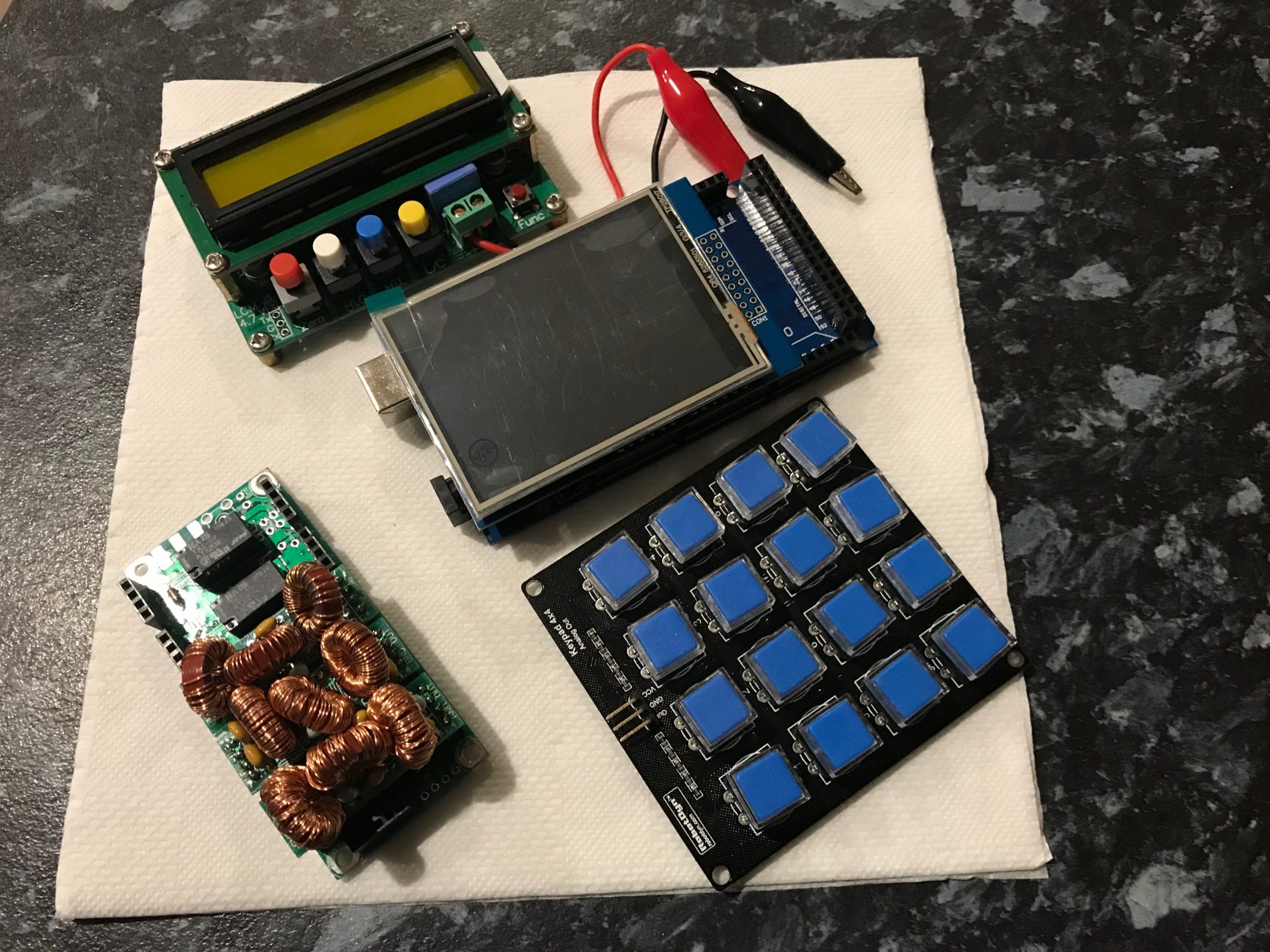
The first meeting of the new Branch 50 (Wellington) NZART kicked off Wednesday 18 April at our regular meeting location (Lutheran Church Hall in King St, Mt Cook) with a report back from the first committee meeting of the new committee. Ideas for meetings through calendar 2018 were discussed with positive feedback to all proposed themes. Now the committee has to get to and arrange all of these items! Members also agreed to the sale of the club rig (IC7410), purchased in 2014. A discussion at a subsequent meeting will determine whether or not this equipment should be replaced. This will also determine what happens to other related station equipment (such as a 12v power supply and tuner). Bernard ZL2BD had planned to give an intro to the Shed Workshops. Unfortunately, Bernard was sick, so Mike ZL1AXG gave a bit of a taster session for the first of the upcoming shed workshops. The first topic will be on antenna matching. Please do come to the inaugural Shed Workshop at 1pm on Sunday 27 April at Bernard's QTH (1 Winsley Tce, Churton Park). No need to bring anything. Just yourself.Mike ZL1AXG gave a brief talk about some of his recent purchases, including a very cheap L-C meter, a 2.8" colour touch screen that plugs into an Arduino Mega, a 16 key keypad that uses a single analogue input on a processor, and a collection of low pass filters on a relay board (sourced from www.qrp-labs.com). Catch you at the Shed Workshop next Sunday!
Club member Yan ZL4YY (also F1TUJ and XV4Y) talked about his operations from South-East Asia, where he lived for many years with his wife and son. He talked about the way amateur radio callsigns are obtained, licensing requirements, descriptions of other Vietnamese operators, and equipment at his home QTH (left outside on the verandah to reduce moisture damage). Yan demonstrated an impressive list of countries worked and DXCC twice over! Yan finally received his ZL licence last month, so you will no doubt hear him around the bands now that he has settled in to Wellington with his family!
John ZL2HD spoke at our Wednesday 17 August about the kinds of antennas, masts and towers that are permitted within the Wellington City boundaries. John outlined efforts involved in trying to protect Amateur Radio interests in the face of city council moves to regulate the proliferation of cellphone towers and streetside cabinets. The process has continued since 2010, when cellphone masts started proliferating. The council had no control over placement of antennas on the roadside utility corridor. Wellington has separate definitions for antennas and aerials in its District Plan – antennas are what telcos use, aerials are thin bits of wire that radio amateurs want. Masts are fine. Towers are something else again. The upshot: “Masts or supporting structures of any height are permitted if they are below 102mm in diameter (guys don’t count so long as they’re not thick); “fatter things” (including lattice masts) cannot exceed 18m in height on a residential site, or rise beyond 5m above the “building profile.” The building profile is determined by a surface at 45 degrees to the horizontal starting two metres above the ground on the property boundary. Rural sites have their own rules, seasides and ridgelines are special cases. Heritage areas are a separate problem. Existing installations survive…
End-fed 1/2 wave At the July meeting (Wednesday 20 July 2016) members Frank ZL2TTS and Doug ZL2AOV gave brief 15 minute talks about their favourite wire antennas. Frank told us about his 40m and up dipole (20m long) fed by open wire feeders. He showed how the feeders were routed between the antenna and the shack, and material used for separating the wires and anchor points. Doug talked about his all band (80m and above) end-fed antenna (40m in length) fed by a balun and coax (with a good earth connection at the feed point). The talks provided for some useful thinking about alternative antennas at city sites where installation of a collection of antennas - one for each band is simply not feasible. These ideas (open wire feeders and end-fed antennas) provide a means of avoiding the problems of lossy small diameter traps or large diameter traps that tend to come to grief in Wellington winds. We can all bemoan the lack of sunspots ... but nothing beats a better antenna in getting a contact!