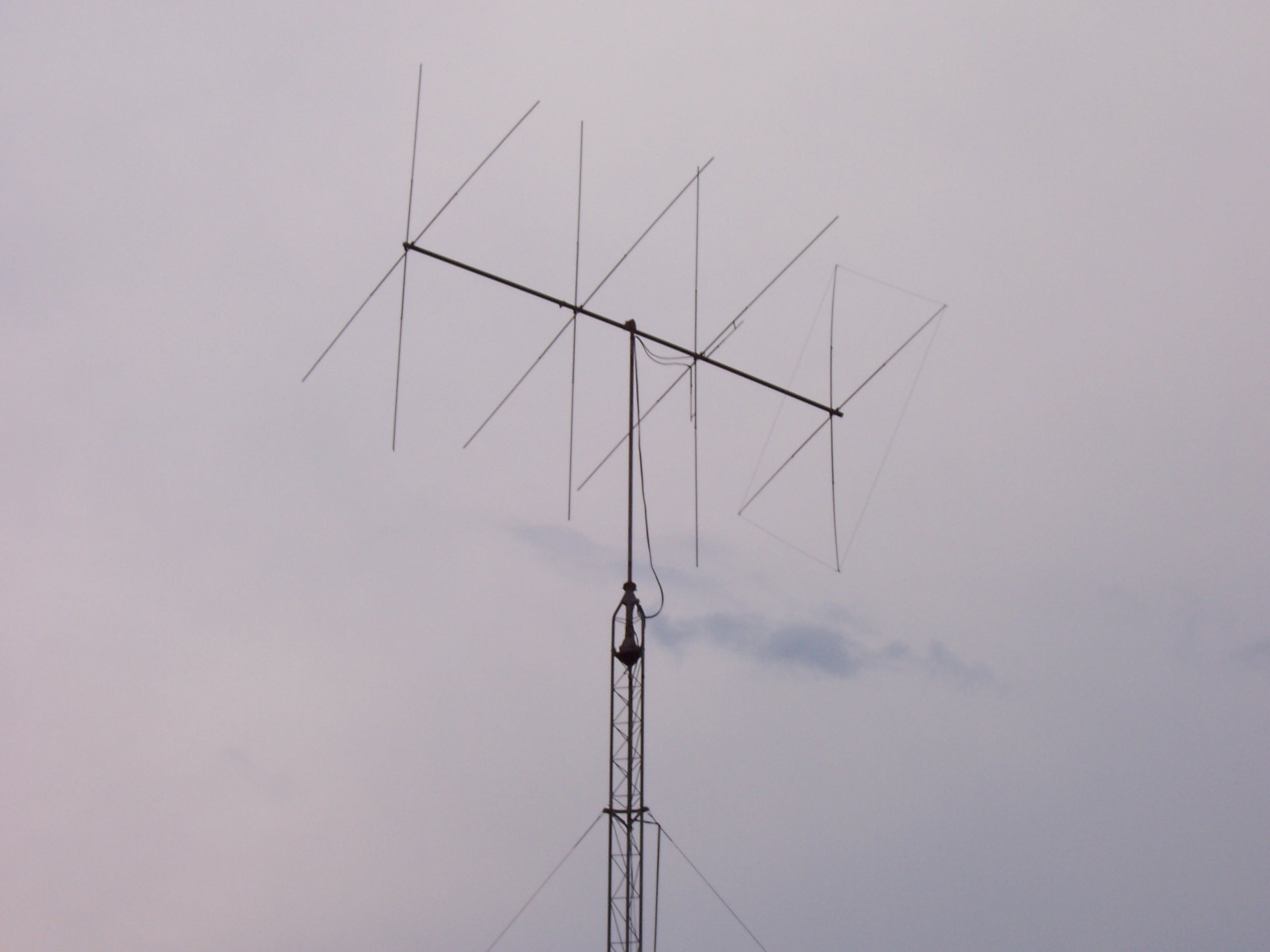
John ZL2HD spoke at our Wednesday 17 August about the kinds of antennas, masts and towers that are permitted within the Wellington City boundaries. John outlined efforts involved in trying to protect Amateur Radio interests in the face of city council moves to regulate the proliferation of cellphone towers and streetside cabinets. The process has continued since 2010, when cellphone masts started proliferating. The council had no control over placement of antennas on the roadside utility corridor. Wellington has separate definitions for antennas and aerials in its District Plan – antennas are what telcos use, aerials are thin bits of wire that radio amateurs want. Masts are fine. Towers are something else again. The upshot: “Masts or supporting structures of any height are permitted if they are below 102mm in diameter (guys don’t count so long as they’re not thick); “fatter things” (including lattice masts) cannot exceed 18m in height on a residential site, or rise beyond 5m above the “building profile.” The building profile is determined by a surface at 45 degrees to the horizontal starting two metres above the ground on the property boundary. Rural sites have their own rules, seasides and ridgelines are special cases. Heritage areas are a separate problem. Existing installations survive (the cutoff being October 2013). Thin supporting structures are possible right up to the boundary, and trapped verticals are thin enough to be fine. NOTE WELL: It is important that you check the city council’s rules and variations when planning to erect aerials, antennas, masts or towers.
End-fed 1/2 wave At the July meeting (Wednesday 20 July 2016) members Frank ZL2TTS and Doug ZL2AOV gave brief 15 minute talks about their favourite wire antennas. Frank told us about his 40m and up dipole (20m long) fed by open wire feeders. He showed how the feeders were routed between the antenna and the shack, and material used for separating the wires and anchor points. Doug talked about his all band (80m and above) end-fed antenna (40m in length) fed by a balun and coax (with a good earth connection at the feed point). The talks provided for some useful thinking about alternative antennas at city sites where installation of a collection of antennas - one for each band is simply not feasible. These ideas (open wire feeders and end-fed antennas) provide a means of avoiding the problems of lossy small diameter traps or large diameter traps that tend to come to grief in Wellington winds. We can all bemoan the lack of sunspots ... but nothing beats a better antenna in getting a contact!
Field day operations At our May WARC meeting on Wednesday 18 May we were given a presentation on how the Patea/South Taranaki branch has approached NZART Jock White Field Day over the last 53 years. Glenn Kingston ZL2KZ, one of our own WARC members, has travelled north each year (with just one or two exceptions, such as when his XYL came down with a high fever) to assist with Field Day operations in South Taranaki. Glenn showed photos of two Field Day sites used over the last 50 years. For some time now, the South Taranaki branch has based their Field Day activities at a primary school located along the sea coast north of Patea. A 60' aluminium tower (sourced by a member who worked at the Motonui synthfuel plant) is stored on site. This is erected each year using a local farm tractor or RV as available. This skyhook allows for an 80m folded dipole antenna to be mounted at near a quarter wavelength above ground. A 40m antenna is mounted lower down the mast. More recently a secret weapon in the form of a vertical incidence 3 element 40 metre yagi pointed skyward has been added to the line up of antennas. The yagi has deployed knowledge provided by another WARC member…
It was Blackwood Cup time again on Wednesday 21 October. Four members brought along home brew projects they had completed over the last 12 months and gave a brief talk on them. John ZL2HD somewhat surprised himself by winning the competition, and taking away the cup. Of course the winner gets to go and get the engraving put on the cup base! John's construction was a clock inspired by a clock he acquired from the estate of the late Bill Hamer ZL2CD. However, this one is controlled within microseconds of the real atomic time and sources its time via an arduino and a GPS chip. In a sign of the times, most of the project time was spent in writing the Arduino "sketch" or program that controls the clock. Well done John! The runner up in the competition was Col ZL2COL who produced a rugged lightweight box for his FT857, power supply, tuner and other bits and pieces, including a swivel out light for the portable shack! This was put to the test on the South Coast at Karori Rock Lighthouse in the International Lighthouse Contest. Other entries included James ZL2ET application of a Raspberry Pi to a miniature transmitter deployed on WSPR service. Don't know…